Why It’s Important to Unskill in 2025 and Beyond
The future of work isn’t just about learning new things, it’s also about unlearning old ones. In a world where technology, markets, and mindsets evolve at lightning speed, being “unskilled” in outdated habits, processes, and beliefs can be just as powerful as acquiring new abilities.
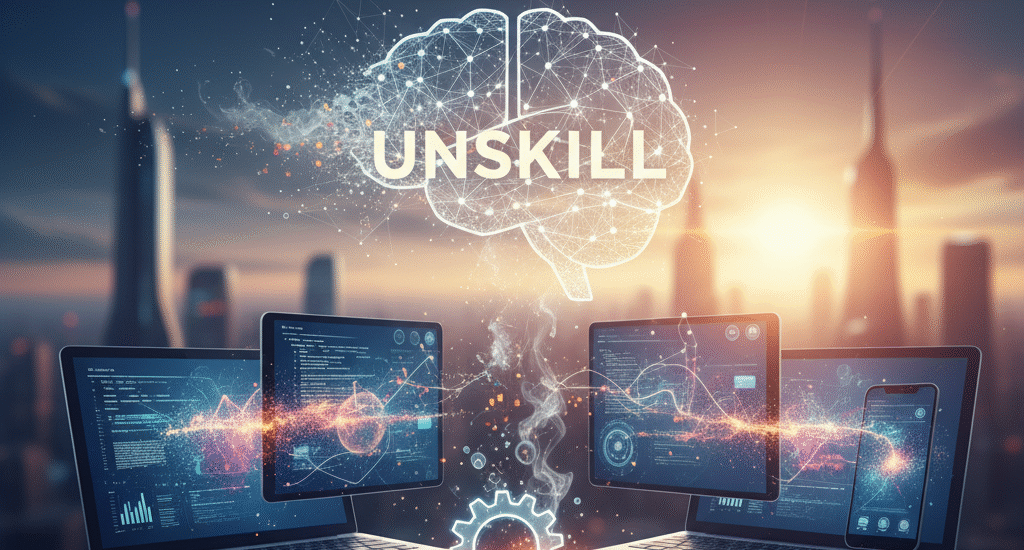
Welcome to the era of unskilling, the intentional process of letting go of obsolete skills, assumptions, and ways of thinking to make room for what’s next.
🔄 What Does “Unskilling” Really Mean?
Unskilling doesn’t mean becoming less capable. It means shedding outdated skills, habits, and mental models that no longer serve you. It’s the conscious act of replacing old knowledge with new, relevant, and adaptable ones.
Think of it like cleaning your digital hard drive. You can’t install new, powerful software if your storage is filled with old, incompatible files.
💡 Why Unskilling Matters in 2025 and Beyond
- AI and Automation Are Redefining Work
Artificial intelligence is automating repetitive and rule-based tasks across industries. Skills that were once in high demand, like data entry, basic coding, or routine design are now being handled by machines.
To stay relevant, we need to unlearn dependence on manual tasks and relearn how to collaborate with AI rather than compete against it.
- The Half-Life of Skills Is Shrinking
According to recent studies, the “half-life” of a learned skill (the time it takes for half of what you know to become obsolete) is now less than five years and dropping fast in tech-driven fields.
This means that even the skills you mastered in 2020 may already be outdated in 2025. Unskilling is how you keep your professional “operating system” up to date.
- Old Mindsets Block New Opportunities
Beyond technical skills, mental unskilling, challenging your assumptions, biases, and routine is essential. Many professionals struggle to adapt not because they lack talent but because they cling to outdated ways of thinking about how work “should” be done.
- Agility Beats Expertise
In the 21st-century economy, adaptability is more valuable than mastery of a single tool or technique. The ability to unskill and relearn quickly allows individuals and businesses to pivot as new technologies and opportunities emerge.
🧭 How to Practice Unskilling
- Question your expertise. Ask yourself: Which of my skills or processes feel comfortable but outdated?
- Stay curious, not defensive. Curiosity keeps you open to learning (and unlearning).
- Cross-train in unrelated fields. Exposure to different disciplines helps you spot which old skills no longer fit.
- Embrace discomfort. Growth begins where familiarity ends.
- Use technology as a teacher. Tools like AI assistants, online simulations, and adaptive learning platforms can show you what’s changed and what to let go of.
🚀 The Future Belongs to the Unskilled and Re-skilled
In 2025 and beyond, success won’t come from knowing everything, it’ll come from knowing what to forget. Unskilling isn’t about erasing your experience; it’s about evolving it. By freeing yourself from outdated knowledge, you make room for innovation, creativity, and growth.
The future of work doesn’t belong to the most skilled; it belongs to the most adaptable.
In short: Don’t just learn. Unlearn, relearn, and evolve.